Spring is the most important time of year for setting your lawn up for success. What happens in the first few weeks of growth largely determines how thick, green, and weed-free your lawn will be for the rest of the season.
At Warren Lawn, Spring lawn care always begins with two core components: fertilizer and pre-emergent weed control. These two work together to wake the lawn up while stopping weeds before they ever become a problem.
Spring Fertilizer: Waking the Lawn Up the Right Way
Your lawn has been dormant all winter. As soil temperatures rise and daylight increases, grass begins to shift from survival mode into active growth.
- Green color
- Leaf growth
- Early-season recovery from winter stress
This initial nitrogen application helps the lawn transition smoothly into the growing season without forcing excessive growth. The goal is steady green-up—not a sudden surge that leads to weak grass and mowing headaches later.
Important note from real-world experience:
Too much nitrogen too early often creates fast top growth with shallow roots. Those lawns may look great in April and struggle badly by July.
What Is Pre-Emergent Weed Control?
Pre-emergent is the herbicide portion of the application, and it has one specific job:
Stop weed seeds from becoming weeds.
To understand why this matters, you have to look back to last fall.
Why Crabgrass and Grassy Weeds Keep Coming Back
At the first frost last year, crabgrass and other annual grassy weeds died. But before they died, they dropped thousands of seeds per plant into your lawn. Those seeds:
- Sat in your soil all winter
- Did not die from cold
- Are ready to germinate the moment conditions are right
In Central Iowa, that trigger point is when soil temperatures consistently reach about 55°F. Once that happens, crabgrass and other grassy weeds begin to germinate—and once you see them, it’s already too late to prevent them.
How Pre-Emergent Actually Works
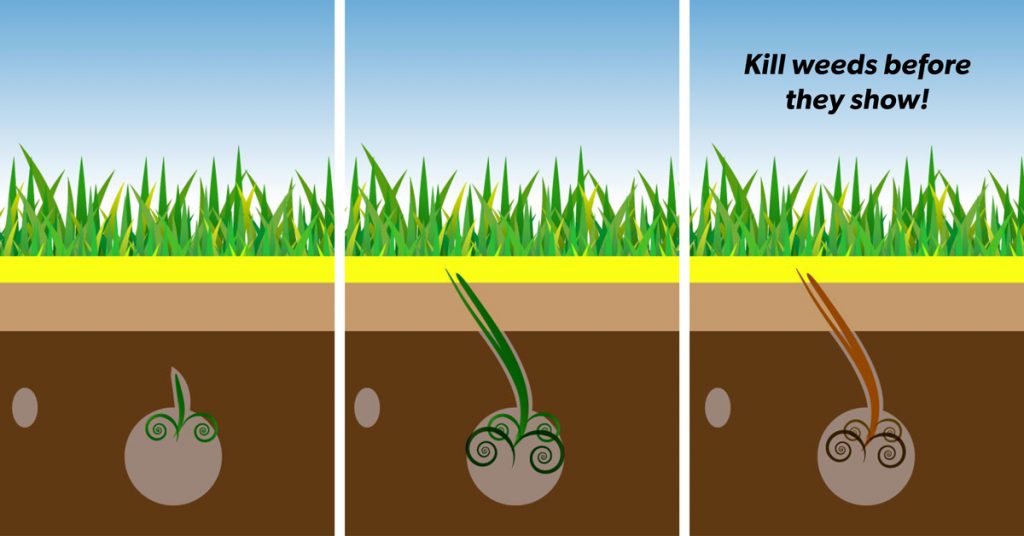
When pre-emergent is applied correctly and watered in, it forms a protective barrier in the upper layer of soil. As weed seeds try to sprout:
- They absorb the herbicide
- Root development is stopped
- The seed dies before it ever becomes visible
This is why timing is everything. Pre-emergent does not kill existing weeds—it prevents future ones.
The Importance of Timing and Coverage
Knowing how and when weeds germinate tells us exactly what needs to happen.
Step 1: Apply Before Soil Reaches 55°F
Pre-emergent must be in place before germination begins. This gives the product time to activate and form the barrier.
Step 2: Reinforce Protection During Peak Germination
No application is perfect. Weather, soil movement, and foot traffic can all create gaps. That’s why we use a two-step approach in Spring.
How We Handle Spring Applications at Warren Lawn
For homeowners in Norwalk, Indianola, Winterset, Waukee, Urbandale, West Des Moines and surrounding Central Iowa communities, our Spring program is built around local conditions—not calendar dates.
- Round 1: Fertilizer with pre-emergent applied early, before the 55°F soil window
- Round 2: Fertilizer with both pre-emergent and post-emergent control applied during and just after peak germination
This second round serves as a safety net. If any seeds slip past the first barrier, post-emergent control helps eliminate them before they establish.
From years of field experience, this two-round spring strategy provides:
- Better crabgrass prevention
- Fewer summer weed outbreaks
- Thicker, more competitive turf
Common Misconceptions We See Every Spring
“If I don’t see weeds yet, I don’t need pre-emergent.”
By the time you see weeds, prevention has already failed.
“All fertilizers do the same thing.”
Different nitrogen percentages, release rates, and blends matter—especially in spring.
“One application is enough.”
Weather variability in Central Iowa makes layered protection far more reliable.
Want to Learn More About Our Fertilization Program?
We regularly share real, on-the-lawn explanations of how fertilization and weed control work through videos and educational content. If you’d like to learn more:
- Visit our YouTube channel for lawn care education
- Or head to our contact page to talk with us directly about your lawn
Spring is short, and timing matters. Getting it right now makes the rest of the season easier.