Why Does This Matter?
Striping is more than cosmetic. When done properly, it encourages consistent mowing habits, proper height, and straight tracking — all of which support turf health. Lawns that stripe well are usually lawns that are being maintained correctly.
In my experience servicing Central Iowa lawns, the best-looking stripes almost always belong to the healthiest lawns.
How Lawn Striping Actually Works
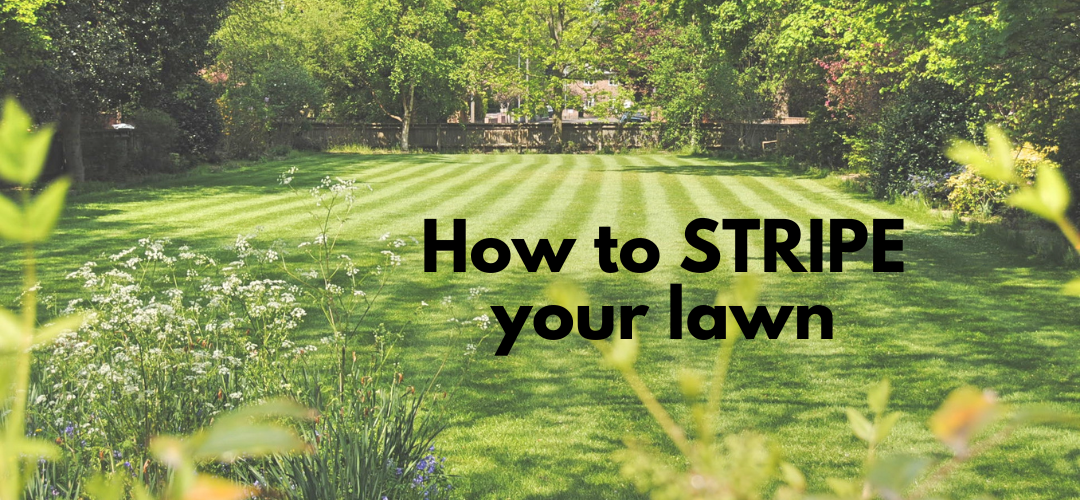
Striping does not involve paint or different grass colors. It works because of light reflection.
- Grass blades bent away from you reflect more light and appear lighter.
- Grass blades bent toward you reflect less light and appear darker.
That’s it.
When you mow in opposite directions, you create alternating bands of bent grass. The sun does the rest. If your lawn is thin, mowed too short, or uneven, stripes will be faint or inconsistent.
Step-by-Step: How to Stripe Your Lawn Properly
1. Start With Proper Mowing Height
In Central Iowa, cool-season lawns should be mowed at 3.5 to 4 inches. Taller grass bends more easily and holds stripes longer.
If you mow too short:
- Stripes fade quickly
- Turf weakens
- Heat stress increases
Healthy height equals better visual contrast.
2. Consider a Striping Kit
The easiest way to enhance stripes is by attaching a striping kit to your mower.
A striping kit:
- Adds weight behind the mower
- Gently presses grass blades in one direction
- Creates stronger contrast
Many residential kits are affordable and easy to install.
If you’re using a standard rotary mower without a striping attachment, you can still achieve striping — it just won’t be as pronounced.
3. Choose a Pattern Before You Start
Before mowing, decide how you want it to look. Common beginner patterns:
- Straight lines
- Diagonal lines
- Alternating wide stripes
More advanced patterns:
- Checkerboards
- Diamonds
- Crosshatch patterns
Think about how the lawn looks from the street. The viewing angle affects how bold the stripes appear. You are not locked into one pattern forever. Rotating patterns also reduces turf wear.
4. Use a Fixed Point to Stay Straight
One of the most common striping mistakes is drifting. The best method I’ve found:
- Start along a sidewalk, driveway edge, or straight border
- Pick a fixed object at the far end (tree, fence post, mailbox)
- Keep your eyes on that object while mowing
- Only glance down occasionally to check alignment
Looking straight ahead instead of down keeps lines straighter. Mow a perimeter pass first. This creates turning space and clean buffer edges.
5. Increase Stripe Intensity (If You Want the “Big League” Look)
If you want deeper contrast:
Option 1: Reel Mower
Reel mowers cut cleanly and lay grass down more evenly. They produce stronger striping naturally. However, they require more maintenance and a smoother lawn surface.
Option 2: Lawn Roller
After mowing, lightly roll over your stripes to bend blades more dramatically. This increases light contrast.
Caution: Over-rolling can compact soil. Use this method sparingly, especially in clay-heavy Central Iowa soils.
Common Mistakes or Misconceptions
“Stripes mean the lawn is different colors.”
It’s only light reflection.
“Short grass stripes better.”
Short grass holds stripes poorly and stresses easily.
“You need expensive equipment.”
Basic mowers can stripe if height and technique are correct.
“Striping damages grass.”
When done at proper height, striping does not harm turf.
Expert Tips Based on Real Experience
After years of mowing and maintaining Central Iowa lawns:
- The thickest lawns produce the boldest stripes.
- Lawns cut below 3 inches lose stripe definition quickly.
- Soil smoothness matters — uneven lawns break stripe lines.
- Consistency in direction and overlap improves results more than equipment upgrades.
If stripes look faint, it’s usually a density issue — not a mower issue.
Lawn Striping FAQ
Will striping hurt my lawn?
No. When mowing at proper height, striping is simply bending grass blades.
Do stripes last all week?
They typically fade as grass grows and stands back up.
Does fertilizer affect striping?
Indirectly. Healthier, denser turf creates stronger visual contrast.
Can all grass types stripe?
Cool-season grasses common in Central Iowa stripe well when maintained properly.
Key Takeaway
Lawn striping is about technique, height, and turf density — not expensive tools. Healthy grass bent in alternating directions creates the visual contrast. If your lawn is thick and maintained at the proper height, stripes come naturally.
Striping won’t fix a struggling lawn. But a healthy lawn will stripe beautifully.